caitri: (Books)
Listening to this lecture this morning and it is *so good.* I finished reading The Poppy War last night and am now a little obsessed; I ordered the other two books in the series.

Her points are super interesting. Waaaaay back ca. 2000 I took an Asian American Lit class, taught by a white person, and while I really enjoyed the class there was very much a focus on trauma. (The book list as I remember it: Memories of My Ghost Brother, The Woman Warrior, Obasan, No-No Boy, annnnnnd one other I'm blanking on.) Asian American SFF of the last few years--The Tensorate Series, The Dandelion Dynasty, and The Poppy War books--have engaged with this too.  Kuang says here that Asian American SFF is incredibly reductionist and Orientalist and she's right. (She talks about people getting her confused with SL Huang.) So much to think about and I have a new literary crush, basically.

<iframe width="560" height="315" src="https://www.youtube.com/embed/e9xxcOh6Rg0" title="YouTube video player" frameborder="0" allow="accelerometer; autoplay; clipboard-write; encrypted-media; gyroscope; picture-in-picture" allowfullscreen></iframe>

Also something that struck me about The Poppy War is how it was A LOT like the cdramas I watch while also not having the cdrama tropes I'm familiar with (no background queers, for instance). Also lack of filial piety. Like, I do not think anyone is going to be punished for their bad relationships with parents and sifus. Like this is not Daoist at all, which makes it VERY different.

Anyhow, new hyperfixation and I want to write paper now...
caitri: (Books)
Bookmark: He Wants to Save Classics From Whiteness. Can the Field Survive? By Rachel Poser

 Snippets:

If one were intentionally to design a discipline whose institutional organs and gatekeeping protocols were explicitly aimed at disavowing the legitimate status of scholars of color,” he said, “one could not do better than what classics has done.” Padilla’s vision of classics’ complicity in systemic injustice is uncompromising, even by the standards of some of his allies. He has condemned the field as “equal parts vampire and cannibal” — a dangerous force that has been used to murder, enslave and subjugate. “He’s on record as saying that he’s not sure the discipline deserves a future,” Denis Feeney, a Latinist at Princeton, told me. Padilla believes that classics is so entangled with white supremacy as to be inseparable from it. “Far from being extrinsic to the study of Greco-Roman antiquity,” he has written, “the production of whiteness turns on closer examination to reside in the very marrows of classics. 

...

Padilla began to feel that he had lost something in devoting himself to the classical tradition. As James Baldwin observed 35 years before, there was a price to the ticket. His earlier work on the Roman senatorial classes, which earned him a reputation as one of the best Roman historians of his generation, no longer moved him in the same way. Padilla sensed that his pursuit of classics had displaced other parts of his identity, just as classics and “Western civilization” had displaced other cultures and forms of knowledge. Recovering them would be essential to dismantling the white-supremacist framework in which both he and classics had become trapped. “I had to actively engage in the decolonization of my mind,” he told me. He revisited books by Frantz Fanon, Orlando Patterson and others working in the traditions of Afro-pessimism and psychoanalysis, Caribbean and Black studies. He also gravitated toward contemporary scholars like José Esteban Muñoz, Lorgia García Peña and Saidiya Hartman, who speak of race not as a physical fact but as a ghostly system of power relations that produces certain gestures, moods, emotions and states of being. They helped him think in more sophisticated terms about the workings of power in the ancient world, and in his own life.

To find that story, Padilla is advocating reforms that would “explode the canon” and “overhaul the discipline from nuts to bolts,” including doing away with the label “classics” altogether. Classics was happy to embrace him when he was changing the face of the discipline, but how would the field react when he asked it to change its very being? The way it breathed and moved? “Some students and some colleagues have told me this is either too depressing or it’s sort of menacing in a way,” he said. “My only rejoinder is that I’m not interested in demolition for demolition’s sake. I want to build something.”


...

To see classics the way Padilla sees it means breaking the mirror; it means condemning the classical legacy as one of the most harmful stories we’ve told ourselves. Padilla is wary of colleagues who cite the radical uses of classics as a way to forestall change; he believes that such examples have been outmatched by the field’s long alliance with the forces of dominance and oppression. Classics and whiteness are the bones and sinew of the same body; they grew strong together, and they may have to die together. Classics deserves to survive only if it can become “a site of contestation” for the communities who have been denigrated by it in the past. This past semester, he co-taught a course, with the Activist Graduate School, called “Rupturing Tradition,” which pairs ancient texts with critical race theory and strategies for organizing. “I think that the politics of the living are what constitute classics as a site for productive inquiry,” he told me. “When folks think of classics, I would want them to think about folks of color.” But if classics fails his test, Padilla and others are ready to give it up. “I would get rid of classics altogether,” Walter Scheidel, another of Padilla’s former advisers at Stanford, told me. “I don’t think it should exist as an academic field.”


~

This with some other reading I have been doing plus general observations. The exhaustion of trying to change a discipline, and its necessity.

But also I like the exercise he does teaching in class to get students think abut the shift from republic to empire. 
caitri: (Default)


- I'm literally pumping the air every time they talk about socioeconomics and the uni students wondering where their next meal is coming from versus the ones wondering what club to go to that night.

- ooh talking about covid and racial data now

- Talking about eliminating the phrase "not racist" because you're either racist or anti-racist, you're either upholding structural racist values or trying to tear them down. Hey.

- On a question on how to deal with racist friends beyond finding new friends (me internally: why?): He suggests starting a book club, having the first few books have nothing to do with race, and then have one that is so that they are already more open to dialogue. (I wonder if he's written about this, this is flirting with bibliotherapy.)
caitri: (bullshit)
 I've caught snippets of this building the last couple weeks, but hadn't caught all of it, and of course this has been an ongoing issue for YEARS. If you are active in fandom and/or fan studies, and use AO3, please consider signing:

Open Letter to the OTW on Racism in Fandom
caitri: (Cait Yatta!)


"You should try coming in through the front door sometime!"
caitri: (Gamora)
"Helen Cho, Age of Ultron, and Representation Feels" by Nicole Soojong Callahan

With Helen Cho in Age of Ultron, we get an Asian woman in a big-budget major motion picture who:

1) has a name,

2) gets more than thirty seconds of screen time,

3) does not die immediately after being introduced,

4) has no apparent martial arts skills,

5) is neither a math tutor nor a geisha,

6) gets to talk and say smart things — even in a roomful of white characters, who actually shut up for a minute and listen to her when she is explaining her science and why she’s a boss,

7) does not exist solely to give some white lady no one cares about questionable relationship advice, and

8) is not a crime lord and/or running a shady as fuck business out of a big scary warehouse. ...

It shouldn’t feel like such a big deal, and I wish I didn’t have to feel so excited about a character like hers. I wish I could be neutral and reasonable and blasé about media featuring Asian characters who don’t seem like tokens or play to obvious stereotypes, but it’s so rare that I can’t be. Is it getting better? I believe it is — there are certainly more Asians on TV. But after going to see Age of Ultron, I tried to think of other American movies with Asian or Asian American characters that meet all the criteria I mentioned above, and I had a very hard time. It was especially difficult thinking of Asian women whose film characters could pass the test. ...

If this is frustrating for me, just a casual viewer/fan fielding awkward questions from her kid, I can’t imagine how frustrating it is for Asian actors and artists trying to make a living. As great as it was to see Claudia Kim in Age of Ultron, we shouldn’t have to feel so grateful for one role in one movie.
caitri: (Cait Yatta!)
Because I can't embed, here's a link.

Via The Mary Sue.

“Nerds don’t have a problem with women,” said host Larry Wilmore, “they have a problem with change.” He then asked the panelists if the whiny manbabies of the internet are racist, sexist, or just gross gatekeeping nerds, to which Amanat replied, “All of the above.” Killin’ it.
caitri: (books)
"The Great Internet Debate Over Not Reading White Men" by Saladin Ahmed

'Bestselling author' is, functionally, a job. And nearly every single one of those jobs goes to a white person (quite often a white man). When women still make only seventy five cents for every dollar that men make, and 98% of the New York Times bestseller list is composed of white authors, anyone who reads primarily white male authors is contributing, quite directly, to the economic inequalities that pervade our culture. Now, some readers — particularly those of a politically conservative or libertarian sensibility — don't give a shit about this. Indeed, they may be actively hostile to the very notion of egalitarianism. The market, in their view, is a pure meritocracy. But many other book buyers believe, as I do, that the market itself is racist and sexist in all sorts of unseen ways. Choosing to buy and read books by women and people of color is one small way to address this.

More selfishly, though, seeking out the voices of women, people of color, and LGBT folks will lead you to wonderful books you might not have found otherwise. Indeed, there are a great many wonderful books that you are likely to miss unless you are consciously choosing to privilege those voices.

This is not simply because, as one commenter on Scalzi's response to the debate put it, "humans tend to default" to what they know. It's because, despite the heroic efforts of many agents, editors, and publicists, publishing's marketing machine is a long way from treating all authors equally. It is my sincere belief that most readers don't know just how slanted the publishing industry is toward a narrow sliver of voices. Unless one deliberately seeks out fiction by marginalized writers, the vast, vast majority of books that cross one's radar via TV, radio, magazines, newspapers, and, yes, the internet, are going to be by white people — and most of those white people are going to be straight men.
caitri: (Gamora)
To start with, there's an upset in Agent Carter fandom on the absence of POCs in 1940s NYC. Tamora Pierce stepped into it by stating that "If you mean the cast is primarily white, it’s the 40s. Which is more offensive to you: black help and blacks in service, or no blacks? I would like to see more POC, yes, but that was the time, and I’m not sure I’d like to see more POC if they’re always going to be in service" and it was one of those moments of OH GODSDAMMIT YOU TOO?! (Seriously, my love for Alanna is now muchly sullied. Anyway) So I wanted to blather on a bit.

So, first of all, the erasure of women and POC from everything is very much a narrative of our culture--in history, in writing, in art, everything. (I've promised myself that one day I'm going to write an essay called "My Invisible Labors" on every time my participation in something high-profile had been erased by TPTB.)

First off, this happens because of a straight-up devaluation of contributions, or what I sometimes like to refer to as "the magical elf narrative." This is when things happen magically, without people "doing" anything, because the people themselves are invisible. Think of it as like hotel service, right, you check into a room, it's perfectly clean and neat, you leave the place a mess, and come back later, and--everything is magically clean and net again, the bed all made up, the towels replaced, etc. You sometimes catch glimpses of hotel staff, but most of the time you don't think about it, because we don't value their labor. I tie this directly to Pierce's statement, because she is devaluing a specific kind of labor--but THE SAME THING HAPPENS ACROSS THE BOARD.

Think of the books that are "magically" ordered and shelved in libraries, of the author-less blocks of text in various circulars and so forth. (I remember once being scolded by a faculty member for not buying a book for her. I apologized and started looking in my records, then asked when she'd put in the request. "What do you mean?" she asked. "You wanted me to buy a book for you but I can't find the record of when you asked for it--usually I keep those on file for when I buy stuff." "Oh, I never told you about it, I just assumed you knew." "..." Yep, actual story, and a useful reminder that I don't actually have psychic powers.) There are an awful lot of things that are done anonymously--or rather, without acknowledgement, because the work is not valued.

Now, when it comes to the idea of POCs as only "the help"--well, 1) that is a very specific, privileged point of view and 2) easily disproven. Like, voila. That we don't see other roles for POC in film speaks more to the received knowledge of filmmakers--people "don't" want to see POC in lead roles, people "won't" find it believable--than to any kind of historicity, and this is problematic. I've written about this before, but once when I was in a fiction seminar and had given folks a chapter of my in-progress novel about a black girl in 17th century England, a ridiculous amount of time was spent--by white people--telling me that it wasn't realistic because "there weren't black people" back then...which led to me reciting population statistics in London and so forth because, well, me, and then finally the teacher just telling me that "even if it's realistic, it's not believable because it's too much," like there's this intellectual yard stick and it has some kind of quota system to it.

Which, you know, ALL KINDS OF BULLSHIT, BECAUSE FICTION.

[And it's funny, as I'm writing this I'm participating in a discussion on Facebook on the issues of class and poverty and elite universities, with someone decrying this as kids "feeling sorry for themselves" and others (including me) arguing that social and economic isolation have very real effects on the academic performance of students, and how there are programs developing to help with this. So, you know, a nugget of hope in the world, as it happens.]

The other thing going on is, well, how all of this is still going on. TPTB still try to limit opportunities for POC and women based on the received knowledge WHICH THEY HAVE BEEN TAUGHT. It's a full, ugly circle of power, and privilege, and really the only way to break it is through education, new texts, and (clearly) sheer stubbornness.

Plus the other thing is--aren't these erased stories just simply more interesting? I mean, think about how everyone freaking loves Downton Abbey--because the bulk of the emphasis of the story is on the less privileged. Hell, they even dabble a bit with diversity with the gay dude, even though they basically made him Neutral Evil. But--can't we hear the stories of ALL the gays, and ALL the POC, etc. etc.?

Anyways, I'll conclude this messy ramble: I didn't get accepted into a prestigious conference, and was feeling rather bummed about it, and I talked to my dissertation chair about it. Her response was basically "lol of course not--because you're writing about women, and that group has always been invested in ignoring them as much as possible. Be patient and get the last laugh!" My chair, btw, is pretty literally a rock star for writing THE book on women's writing in history, so, yeah, she would know, wouldn't she?

Now, it should go without saying, that the rest of us should have our last laughs at the expense of those writers who keep insisting we don't exist, or that we are "too much."
caitri: (chris vocabulary)
I am not quite hate-watching the show; Scott enjoys it much more than I do, as he thinks it is much more "serious" than, say, Supernatural. I find the writing really clunky, and some of the monsters of the week are just boring or stupid. (I'm thinking particularly of the one with the Rom chick and the miners, and also, the fuck is with Pennsylvania and gypsies in pop culture right now?! Hemlock Grove did the same thing, and it's like, ok, of ALL of white America's prejudices, Romani isn't really one of them? And it seems REALLY fucking stupid to act like it is when, you know, freaking Ferguson is going on, you know?)

I also have really mixed feelings about the shift of the setting from London to Atlanta. On the one hand, man is it awesome to have black people on tv in a variety of roles. But--the Afro-Caribbean populations and history is SO DIFFERENT between London and Atlanta, you know? I mean, Atlanta is one of the very few American cities with a significant population of wealthy/middle/upper-class black people, but it is also more segregated than DC and Baltimore are. And it feels like they could be doing some interesting things with this white British dude nonchalantly driving a pick-up truck to go consult with this or that vodoun priest or African or Australian shaman, or whoever needs to do the exposition this week, but they--don't. And it seems to me that it makes more sense for these culturally interstitial crossings to be in London than, you know, freaking ATLANTA, because for all of the cozy "the city too busy to hate" motto, the city also encapsulates way more of contemporary American racial tensions and stuff.

That said, I did like that the climax of one episode happens at The Fox Theater and is actually shot inside of it, and there's also a bit when they break into a museum that may or may not The Fernbank (I haven't been since I was like 14, so I can't quite remember, but I also can't think of where else in Atlanta there would be a museum with dinosaur statues, so).

I *do* quite like Matt Ryan as Constantine--he is one of the few bits that feels absolutely organic and real to me. (I've only seen the one ep with Papa Midnite, and even though the film version got his characterization wrong, Djimon Hounsou **looked** like him perfectly.) That said--he's also too young for the role because, er, he's my age, which means he has the same relationship to the Sex Pistols and 70s punk rock that I do--through CDs obtained as a teenager. And **that** said, I do love the sequence where he has to avoid listening to cursed vinyl by listening to "Anarchy in the UK" because that seems like the most Constantine-y moment to ever be committed to film. But to me it just changes a lot of the character's life story in amusing ways to update him to now (the character was in his late thirties/early forties in the 90s), and now I basically just get entertained imagining Constantine going to shows of Blink 182 and being incredibly bitter about how pop 2000-era punk is, etc.

Anyway, I hope the show gets renewed anyway, just because it could develop in interesting ways once they get through the growing pains. Also, SPN is probably going to wind up this year or next, and I'll have a supernatural horror starring cute dudes gap in my life, and that will make me sad.
caitri: (ample nacelles)
The Ladies Vanish by Shawn Wen:

Andrew Norman Wilson was fired from his contracting job at Google for interacting with what he called a different “class of workers.” He had been watching them for months as they exited the office building adjacent to his. Everyday they left at 2 PM (he later learned that their shifts began at 4 AM). “They were purposefully kept separate. They carried yellow badges that restricted access everywhere besides their own building,” Wilson said.

They were mostly black and Latino—a rare sight on Google’s predominantly white campus. They worked for ScanOps, the team that did the painstaking work of scanning texts that make up Google Books. Intrigued, Wilson attempted to interview some of them. He managed to get a few minutes of tape before he was caught by Google security. He was fired shortly thereafter.

Of course books don’t digitize themselves. Human hands have to individually scan the books, to open the covers and flip the pages. But when Google promotes its project—a database of “millions of books from libraries and publishers worldwide”—they put the technology, the search function and the expansive virtual library in the forefront. The laborers are erased from the narrative, even as we experience their work firsthand when we look at Google Books.

...

It’s very hard to get accurate statistics on the contingent workforce in the tech industry, as tech companies are less than forthcoming. But researching the demographics of mechanical turkers is even harder, as they are decentralized and anonymous. In 2010, New York University professor Panos Ipeirotis conducted a rare study to assess Amazon’s Mechanical Turk workforce. Ipeirotis discovered that almost half of the work force is American. (In fact, the percentage of Americans on the site has significantly increased since Ipeirotis’ study. Amazon changed its terms of service, requiring identity verification of its turkers, which ruled out many Indian workers who could not provide proper forms.) This upends a common argument used by the company’s defenders, who claim that $0.10 a task or $1.20 an hour goes a long way in countries like Pakistan and India.

But would workers be better off without the site? This was the question Ipeirotis leveled to me when I asked him about the mechanical turkers’ low wages and lack of power. People were on the site “voluntarily”—as much as capitalism allows anyone to work “voluntarily.” Workers on the site were free to leave. Workers on the site tended to be American. They tended to be young. Many were caregivers of young children or the elderly and so it benefited them to work from home. And they tended to be women.

Ipeirotis found that almost 70% of mechanical turkers were women. How shocking: the low prestige, invisible, poorly paid jobs on the internet are filled by women. Women provide the behind the scenes labor that is mystified as the work of computers, unglamorous work transformed into apparent algorithmic perfection.

...

Female mechanical turkers meet their parallel in the female computers before them. Before the word “computer” came to describe a machine, it was a job title. David Skinner wrote in The New Atlantis, “computing was thought of as women’s work and computers were assumed to be female.” Female mathematicians embraced computing jobs as an alternative to teaching, and they were often hired in place of men because they commanded a fraction of the wages of a man with a similar education.

Though Ada Lovelace is finally getting some notice almost two hundred years after she wrote the first ever computer algorithm, the women who have advanced math and computer science have largely been ignored. When male scientists from University of Pennsylvania invented the Electronic and Numerical Integrator and Computer, the first electronic computer (which would eventually replace female computers), women debugged the machine and programmed it. When these early female computer programmers unveiled the machine to the military, they were mistaken for models hired to stand attractively next to the new invention.

As computing machines gradually took over, mathematicians often measured its computing time in “girl-hours” and computing power in “kilo-girls.” The computer itself is a feminized item. The history of the computer is the history of unappreciated female labor hidden behind “technology,” a screen (a literal screen) erected by boy geniuses.

Silicon Valley really is a man’s world. Men have great ideas. Men code. Men attract money. Men fund start-ups. Men generate jobs. Men hire other men. Men are the next Steve Jobses, the innovators, the inventors, the disruptors. But women complete the tasks that men have not yet programmed computers to do, the tasks that make their “genius” and their “innovation” possible. And they do it for pennies.


ETA: A friend sent me another link: Sweating Out the Words from 2000:

" A generation ago such work was done within the country that generated the paperwork. Women in the United States did most of the keyboarding then, and many still do, for $7-$10 an hour. But in the late eighties, their jobs began emigrating as employers discovered satellites and other telecommunications technology. Before these innovations, a company interested in cheap Third World labor would have had to ship hard copy abroad at great expense in transport and turnaround time. Now, paper is optically scanned and the images zapped to computer screens thousands of miles away, where the relevant information is keyed in by foreign workers and the digitized material speedily returned to the home office.
caitri: (Cait Yatta!)


via The Mary Sue.

We in the book community are in the middle of a sustained conversation about diversity. We talk about our need for diverse books with diverse characters written by diverse writers. I wholeheartedly agree.

But I have noticed an undercurrent of fear in many of our discussions. We’re afraid of writing characters different from ourselves because we’re afraid of getting it wrong. We’re afraid of what the Internet might say.

This fear can be a good thing if it drives us to do our homework, to be meticulous in our cultural research. But this fear crosses the line when we become so intimidated that we quietly make choices against stepping out of our own identities

And let’s say you do your best. You put in all the effort you can. But then when your book comes out, the Internet gets angry. You slowly realize that, for once, the Internet might be right. You made a cultural misstep. If this happens, take comfort in the fact that even flawed characters can inspire. Apologize if necessary, resolve to do better, and move on.


I wish this is something more creative writing teachers would bring up.
caitri: (Dorian)
Real Life Proves Why Luke Cage Endures

Snip:

Luke Cage was created in 1972.

Four years earlier, in 1968, Martin Luther King, Jr. was shot and killed.

Five years before that, in 1963, Medgar Evers was shot and killed.

Eight years before that, in 1955, a young Black man named Emmett Till was tortured, then shot and killed.

These events, and numerous others with frightening similarity, happened in a line, and in the early years of the first decade to reap the social benefits of the Civil Rights Movement, Marvel Comics gives the fans (and the world) a Black male superhero whose primary superhuman aspect… is that he's bulletproof.

Not flight, or super speed, or a power ring.

The superhuman ability of being impervious to bullets. [...]

And maybe, in the subconscious of the uni-mind of Marvel Comics, is the understanding that Luke Cage may unfortunately always be a relevant fantasy idea for the Black man.

2012 – Trayvon Martin is shot and killed.

2013 – Jonathan Ferrell is shot and killed.

2014 – Michael Brown is shot and killed.

2015/2016 – Luke Cage premieres on Netflix.


And


Falcon - The New Captain America by John Jennings
caitri: (Dorian)
I've been thinking about writing this post for a while, I just wasn't sure how to because there's always the "stating the obvious" thing.

So to start with, a month or so ago I had a chat with another writer friend, who was angsting about "how" to write POC in her novel, because she has fears of being perceived as racist or accidentally racist. Which I guess happened because she read the new Donna Tartt book, and I guess Tartt was criticized for writing all POCs as servants and whatnot? Anyway, my (ever so deep) response was, "Dude, just do your research and write people AS PEOPLE."

which, you know, obvious, right? And yet.

So I just finished reading the new Diana Gabaldon book, Written in My Own Heart's Blood. Which, I largely love her because man she does historical research RIGHT. But she's one of those cases where she tries to write diversity and comes so CLOSE and yet SO FAR. Because she writes POC in broad strokes but doesn't seem to understand that she's doing so, or that, for instance, coming at historical stereotypes from the opposite end is problematic, ie. that writing Native Americans as nobly doomed and JUST AS PROBLEMATIC as writing them as scalping maniacs. And its one of those cases of, see, putting all that attention to detail and family trees and characterization that you put into the Scottish people? Doing THE SAME THING to the Mohawks and the Black freemen and slaves.

Like I said, should be EASY. AND YET.

Here's the other thing, particularly about historical fiction (And this needs to be its own post sometime): Historical fiction is ALWAYS just as much about the time in which it was written as about the time it depicts.

So, for instance, Downton Abbey. (I fucking hate Downton Abbey but damn is it a useful Cliffsnotes sometimes.) Thomas, Teh (sic) Gay Character, is largely treated sympathetically even as he is often a douche. But there's one episode where a character informs the police of his Gayness and Lord Grantham has to talk to the cops and be all "he's just as God made him" and there's a moment and Thomas is left alone. And some people were all "Ohmigod, that is so not historically accurate!!!!" Which, of course not, because in 20fucking14 you can't demonstrate that sort of intolerance without being *read* as intolerant yourself--it's a storytelling decision to maintain sympathy. BUT, when they *do* choose to demonstrate period-accurate intolerance to the Jewish characters? That TOO is a decision, and we HAVE to understand that by doing so the writers are trying to demonstrate that as an old intolerance that is dead and thus "safe"--and never mind how contemporary Jews are getting the same crap as always because it is "invisible" and "historically accurate." We're saying that anti-gay is not okay but that anti-Semitic is normal.

Now think about what that means.

Meanwhile, back to Gabaldon. She has a history of some deeply problematic things, but there were two in this book that REALLY stuck out at me. SPOILERS ) I still love the writing by itself but I really want to make Gabaldon take some consciousness-raising classes and whatnot.

Anyways, as a sort of conclusion: All writing is a deliberate choice on the part of the author. It may be an unexamined choice, but it is still a choice. When it comes to historical fiction, you can't really say "that's how it was back in those days" because that writing isn't coming from THEN, it's coming from NOW, and it's coming from YOU. And you have to be aware of that last bit before all others.
caitri: (Dorian)
I need a Falcon icon.

Anyways, here's the clip from last night's Colbert where Joe Quesada announces that Sam Wilson/Falcon will be the new Cap:

http://thecolbertreport.cc.com/videos/1flr4c/filling-captain-america-s-shoes---joe-quesada [Edited because embed fail.]

I HAVE SO MANY FEELS, YOU GUYS.

Anyway, I've been mentally writing a post on diversity in writing and hopefully I can get on that in the next few days. In the meantime, I can't stop grinning at my Falcon figgie.
caitri: (Cait Yatta!)
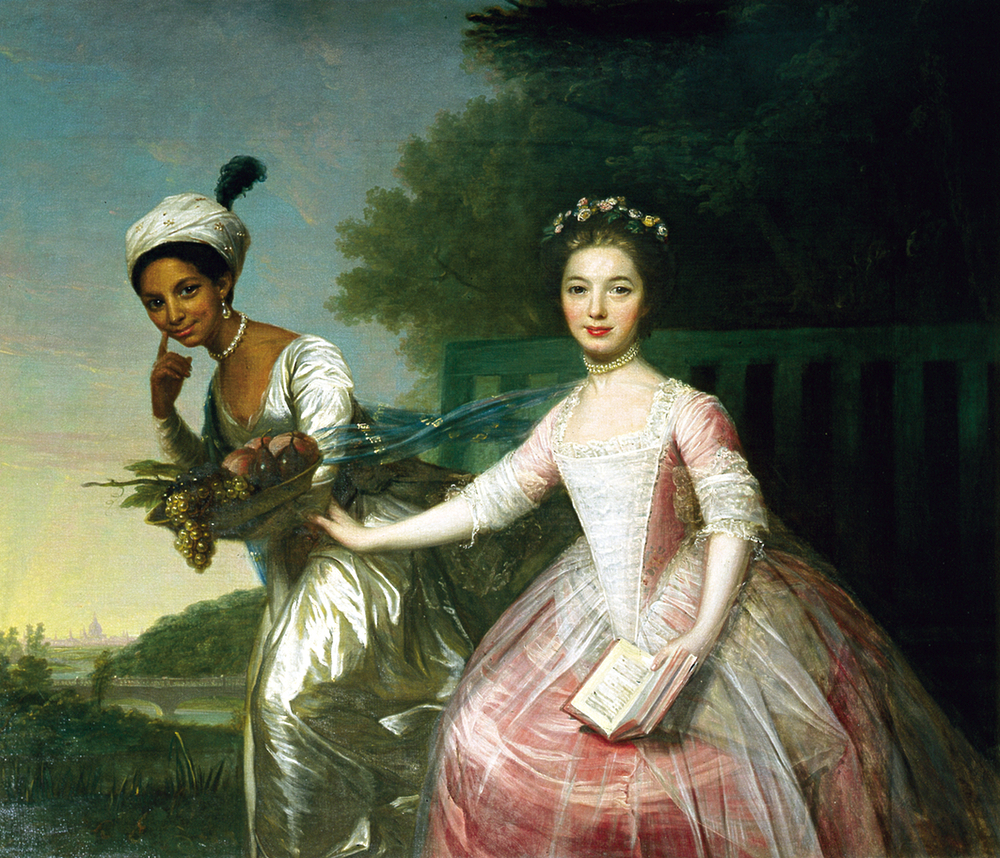
Last night we went to see Belle, a film I was very much looking forward to and was delighted to see playing in town.


Inspired by the true story of a legitimized mixed race daughter in the upper class of 18th c. England, the film flirts at being a romance even as it touches on one of the major legal stepping stones towards the abolition of slavery. After all, a woman in possession of a fortune must also be in search of a husband who isn't an utter douchebag.

Narratively, the film walks the line of "OMG there were black people in England!!!" and "be cool, there were TOTES black people in England." It doesn't always work; there's a tell-tale opening scene when a white dude in the shitty part of town picks up our young heroine and all of the white folks make goggle eyes. Like, there's only the two black people in the scene--the young girl and her aunt--but, come ON, there was a thriving community of ~250,000 blacks in London. Much later there's a scene when Belle and her cousin Elizabeth are in London for the season and Belle is struggling with combing her hair, and the black maid shows her that it's easiest to start from the ends. Which...it seems like this is the first time Belle has ever seen another black person? And I guess she's had to comb her hair the hard way for 21 years? The ONE SCENE with more than two black people in it is the climax at the end, when there are numerous black men in the balconies of the court, and NONE of them have lines, which reminded me uncomfortably of Django Unchained.

Newsflash, screenwriters: black people had a helluva lot to do with the abolitionist movement; it wasn't all just about white allies. JUST SAYIN'. (Amazing Grace is guilty of this sin too.)

I thought the film did a good job with the, ah, subtleties? flavors? of various kinds of racism too. Draco Malfoy appears as, er, Draco Malfoy--seriously, I kept waiting for him to call Belle a mudblood--who has nothing but disgust for Our Heroine, while his brother is the "nice" sort who thinks Belle's a babe and would totally be down with marrying her because she's rich and "overlook" the fact that she's brown and whatnot. Those conversations reminded me of all of the "Spock and his human mother" moments in Reboot; I was a little bit surprised that Belle actually didn't say "Live long and prosper" at the end there.

One of the things the film got very close to getting right was the friendship of Belle and Elizabeth, but even that was a little odd. Elizabeth hates that Belle can't eat with the family when company is over because reasons, and she's often sympathetic, but she is also absorbed in finding herself a husband and somehow can't tell Draco is a douche. There's also a scene where Belle is trying to explain that Draco is a douche and Elizabeth accuses her of lying and it's just an ugly, unfortunate scene that didn't really work for me on any level. It felt kind of shoved in, like someone said to the writers "you need to put some character tension in" and rather than say "you don't think 18th century mores make ENOUGH tension?!" they went ahead and did this.

Another narrative weakness was that the film never quite got at what the status of race actually WAS in ca. 1780. There's a scene where Belle asks if the black maid is a slave or not, and her uncle says that she's free and under his protection. "Like me," says Belle. Maybe a British audience would have been up on the fine points on this topic, though I doubt it, and the average American audience definitely wouldn't be. Seriously, a succinct three line paragraph at the beginning could have clarified this.

In short: it's a great film that's gorgeous, has great acting, and will hopefully be useful for having better conversations on race and history, but it also totally takes all of the easy paths of storytelling, and a complex story like this needed more.
caitri: (books)
Today's recommended reading: Confirmation Bias, Epic Fantasy, and You

Snip:

Confirmation bias doesn’t cause the phenomenon of Mysteriously Whitewashed Medieval Europe. (Or Peculiarly Denuded of Women Europe, or Puzzlingly Focused On The Nobility Europe, or any of the other bizarre things we tend to see in medieval Europe-flavored fantasy.) Confirmation bias causes the freakouts that occur whenever somebody points out these phenomena, and names them as inaccuracies.

...

Like the Wikipedia entry suggests, confirmation bias is usually worst when a person feels threatened by anything that challenges their preexisting beliefs. Since the preexisting beliefs associated with bigotry are all tied up in identity and privilege, it’s not really surprising that the sense of threat is there, merited or not. Identity and privilege are things of the ego; they’re about what we think of ourselves. Bigotry tells privileged people that they deserve to be privileged; that they should have an easier life and a better self-image and more power because they are special; that the reason less-privileged folks don’t get the same preferential treatment is because they are inferior in some way. Challenging this thinking means saying to people: actually, no, you’re not all that special, or maybe you are but not because you’re [insert identity], and also those other people aren’t inferior at all, they just weren’t “lucky” enough to be born with your identity. For people who get used to being incessantly told “You’re awesome!” being told instead that, “Eh, you’re just okay” is a little bit of a comedown. (But a comedown is not oppression. Anyone who thinks that really has no concept of what oppression really is.)


(One day I am going to fangirl all over NK Jemisen and it's going to be extraordinarily awkward for everyone involved.)

I've been thinking a lot about race and worldbuilding recently because it's relevant to both of my current creative writing projects. Growing up, I didn't think about race in fiction because it's a topic that doesn't come up that much in the classic SF/F I was reading (because everyone was white) or on tv (Star Trek and stuff where it was a utopia and it didn't matter except when funny-looking aliens had issues, and it probably took me way longer than it should have growing up to figure out Those Metaphors). As an adult, I think about it A LOT because I see the things going on with Racefail and the SFWA fracas and so forth. I really wish it was something that could have come up in my writing classes, which were majority white with one Hispanic, and the one Hispanic teacher who actually told me that having my historical printerfic with a black woman printer stretched credulity because it was "too much" (I am never getting over that, ever, ever; "stretching credulity" has since become my unofficial motto).

It's funny to me how we become entrenched in these cultural narratives (Jemisen brings up the loaded "forces of light and dark") but aren't taught how to break out of them (if anyone has some books on the topic, could you rec them?), and only slightly are we taught to even see them. I feel like I keep my reading eyes so wide now trying to find things that I almost can't relax when watching media anymore (I think this is also why I've gotten addicted to Korean dramas, because the cultural narratives are so different that I actually can sit back and enjoy the story; also, I just really enjoy how they exoticize the west, which probably should be a paper sometime).

~

In today's reading here's a lovely bit of a poem by Lady Anne Southwell (1574-1636) who wrote a poem complaining about women writers being criticized by men:

Dare you but write, you are Mineruaes bird
the owl at wch these battes & crowes must wonder,
they'll crittickize vppon the smallest word
this wanteth number case, that tense & gender
then must you frame a pittiful epistle
to pray him bee a rose was borne a thistle.
caitri: (books)
Oh look, another case of "transformative work becomes literature when a white man does it."

Mammy Revealed, and Not Just Her Red Petticoat; ‘Gone With the Wind’ Prequel Coming in October

Mitchell was criticized for the one-dimensional nature of many African-American characters in the book, particularly Mammy, who cared for the fiery Southern belle Scarlett O’Hara. An unauthorized parody of the classic novel, “The Wind Done Gone,” published in 2001 over the objections of the Mitchell estate, was told from the perspective of a slave whose mother was Mammy.

Mr. Borland said the new book addresses those criticisms head on.

“What’s really remarkable about what Donald has done is that it’s a book that respects and honors its source material, but it also provides a necessary correction to what is one of the more troubling aspects of the book, which is how the black characters are portrayed,” Mr. Borland said.

In an email, Mr. McCaig, 73, who lives on a farm in Virginia, said that he was drawn to write about Ruth because there are “three major characters in ‘Gone With the Wind,’ but we only think about two of them.”

“Scarlett and Rhett are familiars, but when it comes to the third, we don’t know where she was born, if she was ever married, if she ever had children,” he said. “Indeed, we don’t even know her name,” he said. “Ruth’s Journey” also fleshes out the story of one of the more compelling figures in “Gone With the Wind,” Ellen Robillard O’Hara, the matriarch of the clan, who dies at the Tara plantation during the Civil War. Among the other new plot twists Mr. McCaig dreamed up: Ruth, has an early marriage that was not broached in “Gone With the Wind”; and she has a connection to Rhett Butler’s family that explains her hostile behavior toward Rhett later in the classic novel.


You know, I'm really fascinated by this, but my hackles are up that they hired an OLD WHITE MAN to tell a BLACK WOMAN'S STORY. Now in fairness, from the article it sounds like they hired McCaig to do a prequel, and he said that he wanted to do it about Mammie, which is a little different, but still. I really, really want a serious treatment of this issue (the parody The Wind Done Gone was a story told from the POV of Scarlett's mulatto half-sister, which sounds GREAT, but the excerpts I read online were TERRIBLE, without--as near as I can tell--any historical understanding or reflection on historical race issues etc etc) but I don't think this is it.

Let's consider Django Unchained as the other recent black slave's story told by a white man narrative (note: I enjoyed parts of the film and what it tried to do, but damn it went wrong in so. many. places.). Here's Jesse Williams's (yes, the actor, who used to be a history teacher and who is also just a fucking brilliant author and analyst) essay on Django, In Chains

In the film's opening sequence, shackled blacks literally hold the key to their shackles and don't use them, choosing instead to trudge forward, hindered by biting chains, to kill a white man. In the third act, after seeing Django kill the Australians, the blacks sitting in an open cage neither communicate with each other or consider stepping outside of the cage.

In fact, in this entire, nearly three-hour film, there are no scenes with black people interacting, or even looking at each other, in a respectful or productive way.

If only one black person (Django) displays the vaguest interest in gaining freedom, while the rest consistently demonstrate that they wouldn't do anything with that freedom, were they to obtain it, then we're not able to become invested in them or their pursuits: We can't relate to shiftless characters. Being illiterate, and/or brown, does not remove the ability to think, or observe or yearn or plan or develop meaningful relationships.

...

"Django" is just a random guy, who, to no credit of his own, was plucked from slavery by an impressive white man and led on a journey to save his wife.


Co-opting narratives is always problematic, but even more so when it's white authors co-opting racial narratives in a country that is still dealing with these issues. (As Aasif Mandvi recently pointed out on The Daily Show mock-seriously, we're "still reeling from a civil war.") You only need to consider the problems of stories like The Help (in which the Civil Rights movement is personified through the voice of a white woman) or, Gods help us, A Song of Ice and Fire (you know, Daenerys having to explain to all the brown people that slavery is wrong. *headdesk*). Or, even better, the yet more recent case of 12 Years a Slave posters focusing on the white stars:


I especially love Brad Pitt's halo.

Sigh.

Now, all of this isn't to say I don't think white writers can tell the stories of non-whites effectively, or with care. I think it can be done, but I think A LOT has to go into considerations of cultural appropriation, historicity, and think-checking one's own privilege, and all too often, neither of things happen. Hence we end up with Racefail and, you know, The Last Airbender *shudder*

IN CONCLUSION:

This book is problematic.
caitri: (books)
Previously I had a long and rambly post about women's writing that I want to bring up again because I found a lovely nugget in Joad Raymond's Pamphlets and Pamphleteering in Early Modern Britain. He reprints a comic poem by John Taylor (cited in The Penguin Book of Renaissance Verse 1509-1659, selected by Norbrook, ed. Woudhuysen (1982), p. 740) that talks about pamphlets, which was also apparently yet another word for prostitute:

For like a Whore by day-light or by candle,
'Tis even free for every knave to handle:
And as a new whore is belov'd and sought,
So is a new Booke in request and bought.
When whores wax old and stale, they're out of date,
Old Pamphlets are most subject to such fate.
As whores have Panders to emblazon their worth,
So these have Stationers to set them forth.
And as an old whore may be painted new
With borrowed beauty, faire unto the view,
Whereby shee for a fine fresh whore may passe,
Yet is shee but the rotten whore she was.
So Stationers, their old cast Bookes can grace,
And by new Titles paint a-fresh their face.
Whereby for currant they are past away,
As if they had come forth but yesterday.

*NB. All italics are represented as in the text, as they were presumably printed in the 16th c. Also, "Stationers" is a catch-all term for those in the booktrades, so printers, engravers, binders, and even booksellers.

I'm finding it increasingly fascinating and creepy how there is a consistent language connecting women's writing with women's bodies, especially with regards to being read and consumed. I suppose an analog is the "Biblical" (can someone correct me here--I'm thinking this is KJV and therefore 1611 language) phrase "to know" someone ie. "to have sex with them," knowledge/"carnal knowledge" etc.

~

Other interesting things:

Genre Wars: SFF at the AWP Conference

Both women fielded questions about breaking into science fiction as a male-dominated field. Le Guin’s response—that she “didn’t care what men were doing,” that it wasn’t a feminist movement, but “just taking over,” was patently great. Gloss was quick to point out, though that the question had disregarded the masculinity of the literary canon. Their “take-over” was not of an inherently misogynist genre, but of a larger, male-dominated publishing industry and culture.

...

Mamatas went a slightly different route, tracing the history of publishing to highlight its economic divisions. The pulps, produced for and by the working class, and the “slicks,” which paid their authors and were only accessible to the middle and upper class, is just one example of this phenomenon. If the middle class is in charge of schools, he said, the schools will work in the mode of the middle class. Like Wonders and Kanaka, though, Mamatas spoke in terms of the larger picture—it’s high time that we stop pretending that the literary world’s dialogue about genre has anything at all to do with “bad writing” alone. Surprisingly, art doesn’t exist in a vacuum—economic or otherwise.


The article also references a panel on teaching SFF in creative writing classes, but doesn't discuss the panel in depth, which is too bad. Of the six university-level creative writing courses I've had in my life, not one taught SFF, and not one of the teachers was prepared to provide feedback on SFF material. I say this with the nota bene that I was always told I could write SFF but the profs couldn't help me with it--which, fair enough, but how is it that genre does not seem to come up at all as a topic of discussion in writing courses?

Smuggler’s Ponderings: History, Fandom and Masters of Science Fiction

It seems to me that there’s this idea that Science Fiction – as genre and as fandom – has a “history.” And that (real) fans should know this particular history.

My main question when hearing this argument is: “history” as perceived by whom? As defined by whom?

Why is it that this early history of Science Fiction fandom is presented as “idyllic” when we know for a fact that large groups of people stood outside looking in? Isn’t that history being rewritten in front of our very eyes? Try this: when you Google “best Science Fiction of all time” or “essential Science Fiction novels,” you almost invariably get lists featuring works by the same group of people. Very few contain writers who are not white and male. The narrative that chooses this subset of people as the only worthy “masters” of the genre? Isn’t that, too, rewriting history in front of our very eyes?

It is obvious to me that this idyllic period of Science Fiction “history” is told largely from an American, white, male perspective. It might be an important part of a historical narrative, but it is not the whole narrative. Surely, it can’t be. If we choose to brand only those works “masterful” and “classic” and “essential”, what are we saying?


This article connects a few different dots in recent goings-on, including the Ross-Hugo flap and by Baen editor Toni Weisskopf's piece on "true" fandom/SFF readers.

How to Stage Your Show Without Being Super Racist

In Philadelphia, the Lantern Theater Company is currently wrapping up the run of its annual Shakespearean offering, The Tragedy of Julius Caesar. This time, they've put a twist on the great tragedy by changing up the Roman Republic and setting the play in medieval Japan. That's great, except there isn't a whole lot in this production that's legitimately Japanese -- most notably, a glaring lack of Japanese actors.

Dance theater artist (and actual Japanese person) Makoto Hirano saw the play, and it did not sit well with him. So he drafted a letter to the Lantern Theater Company outlining some "friendly unsolicited pointers" on How to Stage Your Show Without Being Super Racist. PROTIP: "DON'T say you were inspired by feudal Japan and then not cast any Japanese actors." Seems like that should have been a big one.


His full, gorgeous letter is reproduced in toto at the link.

Profile

caitri: (Default)
caitri

December 2025

S M T W T F S
 123456
78910111213
14151617181920
21 222324252627
282930 31   

Syndicate

RSS Atom

Most Popular Tags

Style Credit

Expand Cut Tags

No cut tags
Page generated Jan. 3rd, 2026 04:35 pm
Powered by Dreamwidth Studios